Ellen Barber
In most dogs, an isolated bout of diarrhea is nothing to worry about. As long as they seem to feel fine otherwise, it’s usually safe to wait a day or two to see if the dog’s stool will firm up on its own. In the meantime, pet parents can accelerate healing by feeding the right foods and supplements to calm their dog’s digestive tract and support their gut health.
Sometimes Diarrhea Is “Normal”
As unwelcome as it tends to be for everyone involved, diarrhea—soft or loose stool—is actually an adaptation that helps scavenging animals like dogs rid themselves of toxins, parasites, or pathogens that they’ve consumed.
Not all diarrhea is the same, and there are several ways that veterinarians describe and classify it.
Diarrhea is typically classified as either acute or chronic. Acute diarrhea begins suddenly, and lasts for at least 2 full days. If the diarrhea lasts more than three weeks, it is considered chronic diarrhea. Chronic diarrhea often indicates an underlying health issue such as inflammatory bowel disease (IBD).
Whether a case of diarrhea is categorized as acute or chronic, one can also describe the severity of a dog’s symptoms. Diarrhea is considered mild if it lasts for no more than 3 days and if the dog has no other symptoms and is eating and drinking normally. Moderate and severe cases of diarrhea refer to progressively more intense symptoms.
Learn more about the most common causes of diarrhea in dogs.
When to See Your Veterinarian
Diarrhea in puppies, senior dogs, and dogs with known health conditions likely warrants a trip to the vet. Learn more about diarrhea in puppies, which can sometimes be indicative of a parasite like Giardia or a viral infection like parvovirus.
If your dog has other symptoms in addition to diarrhea—such as vomiting, loss of appetite, lethargy, fever, dehydration (dry gums, sunken eyes), or abdominal pain—consult your veterinarian right away. Your dog may benefit from hospitalization to receive fluids or other supportive care.
Black, tarry stools can be a marker for bleeding from the upper digestive tract and should always be treated as an emergency. Seek immediate veterinary care.
Eating a toy, a stick, or any other foreign object should also be treated as an emergency. An obstruction in your dog’s gastrointestinal (GI) tract—which can cause diarrhea as loose stool seeps around the blockage—may require prompt surgical intervention.

How to Stop Your Dog’s Diarrhea at Home
If you’ve determined that your dog’s diarrhea isn’t an emergency, and it isn’t accompanied by any other symptoms, you can wait to see whether it will resolve on its own. During this time, here are some things you can do to help your dog feel better and perhaps even stop the diarrhea more quickly:
- Provide plenty of fresh water to keep your dog hydrated
- Withhold food for 6–12 hours
- Feed a bland, easily digestible diet
- Feed small, frequent meals
- Avoid feeding treats or fatty foods
Fasting your dog for a few hours can give their gut a chance to rest and heal. Withholding food (for 6 to 12 hours) reduces the amount of material in your dog’s intestines, so diarrhea caused by material moving too quickly through the GI tract often responds well to a brief period of fasting.
Check with your vet before fasting puppies, senior dogs, and dogs with known health issues.
Always provide plenty of fresh water. Reintroduce food very gradually, starting with a bland diet.
What to Feed a Dog with Diarrhea
When your dog has diarrhea, the best way to help their GI tract heal is to feed a diet that is easy for their digestive system to handle. The right supplements can also help by supporting and rebalancing the gut microbiome.
Feed a Bland Diet
As long as your dog isn’t vomiting, it’s best to start with small amounts of bland foods. A very low-fat, easy-to-digest diet helps soothe the GI tract and gives the intestinal lining a chance to repair itself.
Here are some foods you can feed a dog with diarrhea:
- Broth (chicken or turkey, unsalted, low-fat, no other ingredients or additives)
- Lean proteins like chicken or turkey breast (skinless, boiled, cooled, and cut into small pieces)
- Lean ground beef (boiled)
- Low-fat cottage cheese (small amounts)
- Scrambled egg (small amounts)
If your dog can’t tolerate the protein sources listed above (e.g., due to food allergies or intolerances), a prescription food with hydrolyzed protein may be a better option. Hydrolyzed protein has been broken down so that the overactive immune system doesn’t recognize the protein. This makes it much easier for sensitive dogs to digest.
Feed Small Amounts
Feeding a bland diet in small amounts will help rest your dog’s digestive system. Start with 2 tablespoons of food per 10 pounds of body weight. Offer this small amount every two to three hours for the first day.
Remember that it’s better to offer too little food than too much, even if your dog begs for more.
For the next three days, if bowel movements are firming up and your dog still has no other symptoms, gradually increase the amount of food at each feeding and decrease the total number of feedings.
Add Fiber and Prebiotics
Dietary fiber helps produce more solid stool by absorbing moisture, and also by slowing the movement of material through the intestines. Some special fibers are prebiotic, meaning that they feed the beneficial bacteria in your dog’s gut microbiome.
Adding inulin or psyllium husk powder to your dog’s diet supports healthy digestion by nourishing the beneficial bacteria that live in the colon. Fructooligosaccharides (FOS) are another kind of prebiotic fiber that feeds beneficial bacteria in the gut. FOS has been found to be beneficial for both the digestive and immune systems.
AnimalBiome’s S. boulardii + FOS is designed to help reduce the frequency and severity of diarrhea in dogs by providing prebiotic FOS along with S. boulardii—a probiotic strain of yeast that reduces inflammation and promotes regrowth of healthy bacterial population.

How to Transition Back to Your Dog’s Regular Food
As long as your dog appears to feel okay, feed the bland diet for three to five days after an episode of diarrhea. (If your dog seems unwell or is vomiting, consult your veterinarian.)
Once your dog has had solid poops for about 2 full days, start transitioning them back to their regular diet.
Starting on the third day, mix in a little of their regular dog food, gradually increasing the proportion. If your dog still seems to feel fine and the diarrhea has resolved, you should be finished transitioning them back to their regular diet by day 7.
If at any point during this transition process your dog has worsened diarrhea, experiences vomiting, or seems to be feeling unwell, consult your veterinarian immediately.
Should You Feed Your Dog Rice and Chicken for Diarrhea?
Many pet advice sources recommend a bland diet consisting of boiled chicken and cooked white rice. But in the long run, the high level of carbohydrates in rice is not ideal for a healthy dog microbiome. High-carbohydrate foods encourage the growth of “unfriendly” (inflammatory) bacteria in the gut, which can actually make GI distress worse.
As AnimalBiome’s State of the Gut report explains:
Too many carbohydrates can cause an overgrowth of a group of bacteria called Firmicutes. The body needs some Firmicutes to keep the microbiome healthy, but too many of these bacteria can spread excess inflammation throughout the body.
A bland diet for a dog with diarrhea is intended to be a temporary measure. It won’t provide complete and balanced nutrition, but for the two or three days it takes for a bout of diarrhea to subside, your dog will be fine eating small amounts of low-fat, easy-to-digest proteins without added carbs (such as white rice).
Is Pumpkin Good for Dog Diarrhea?
Another food many pet advice sources recommend for dogs with diarrhea is plain canned pumpkin. (Never feed a dog pumpkin pie filling, as it typically contains added ingredients that are not healthy for dogs.) Pure pumpkin does contain a small amount of prebiotic fiber, but it also contains a lot of simple sugars (carbohydrates), which feed Firmicutes bacteria, meaning that pumpkin may do more harm than good.
Mashed potatoes, cooked carrots, and cooked sweet potatoes all come with the same downside: lots of simple sugars and not enough beneficial prebiotic fiber.
What about Yogurt?
In small amounts, plain yogurt may be an acceptable bland food for a dog with diarrhea. But don’t feed more than 1-2 tablespoons, as too much dairy can actually make diarrhea worse. That’s partly because the probiotic bacteria in yogurt (typically including organisms like Lactobacillus delbrueckii subsp. bulgaricus, Lacticaseibacillus casei, and Streptococcus thermophilus) aren’t normally found in the gut microbiomes of healthy adult dogs. Small amounts are safe, but large quantities of such probiotic bacteria won’t contribute much to the balanced community of microbes that a dog’s gut needs to function.
Some strains of Bifidobacterium can exist in a dog’s gut, but they are not typically prominent in the adult canine gut microbiome.
Avoid Medications When Possible
Unless your veterinarian prescribes it, avoid using any kind of medication to control your dog’s diarrhea. It’s especially important not to give human diarrhea remedies to a dog. These over-the-counter medications may contain ingredients that can be dangerous and even fatal for dogs.
The antibiotics metronidazole and tylosin are important tools for treating severe chronic diarrhea in dogs, but they may not be appropriate for acute diarrhea. The reason for this is that antibiotics kill off beneficial bacteria along with disease-causing bacteria, so giving unnecessary or inappropriate antibiotics can actually worsen diarrhea by disrupting a dog’s gut microbiome.

Pro Tips
Once your dog’s diarrhea has resolved, you can help keep their digestive system healthy by building a strong gut microbiome with science-backed supplements.
AnimalBiome’s tasty Gut Shield Chews provide postbiotics to support healthy immunity, enzymes to improve nutrient absorption, and fiber to maintain good stool consistency.
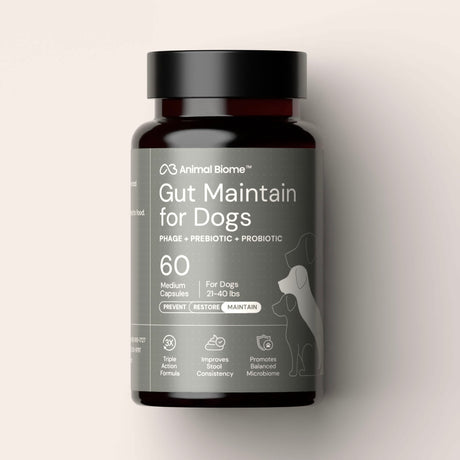
And to help resolve occasional flare-ups of diarrhea, try AnimalBiome’s Gut Maintain prebiotic and probiotic supplement for dogs. It contains a unique blend of the probiotic yeast S. boulardii to resolve diarrhea, the prebiotic FOS to feed beneficial bacteria, and the bacteriophages in PreforPro® to reduce pathogenic E. coli.
Key Takeaways
- If your dog has diarrhea but is not vomiting, it’s usually safe to wait a couple of days to see whether the diarrhea will resolve on its own.
- A few days on a bland (low-fat, easily digestible) diet can help resolve diarrhea by soothing the GI tract.
- Feed small amounts at first, gradually increasing the amount of food over several days as your dog’s diarrhea improves.
- Chronic diarrhea (lasting three weeks or more) likely indicates an underlying health condition. See your veterinarian for a diagnosis.
FAQs
What is the best dog food to harden stools?
A diet that contains sufficient fiber will help form solid stools, because fiber absorbs excess moisture in the intestines and slows the progress of material through the GI tract.
Certain fibers—like inulin, psyllium husk powder, and fructooligosaccharides (FOS)—are also prebiotic, meaning that they support healthy digestion and stool formation by feeding the “good” bacteria that live in the colon. This Complete Fiber Blend includes prebiotic fibers that nourish beneficial bacteria throughout the intestinal tract.
Is scrambled egg good for dogs with diarrhea?
Plain, fully cooked scrambled eggs are easy to digest and high in protein. But they should be fed only occasionally and in small amounts, since eggs are not as nutritious as boiled chicken or turkey.
What is the fastest way to cure diarrhea in dogs?
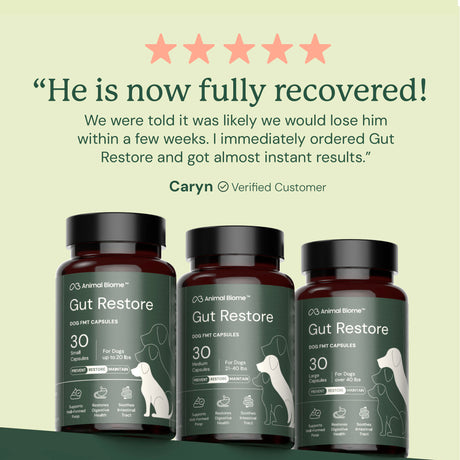
Feeding a bland diet in small, frequent meals for two or three days should help your dog’s digestion return to normal. Adding a little prebiotic fiber, like inulin or FOS, will help feed the beneficial bacteria in their gut and promote healthy digestion. AnimalBiome’s Gut Restore can help resolve diarrhea that’s caused by an imbalance in the gut microbiome.
What if my dog has diarrhea for 3 days but is acting normal?
Diarrhea that lasts for two or three days (with no additional signs of illness) usually isn’t cause for alarm, as long as your dog has no known health problems (like IBD or diabetes). But you should consult your veterinarian if your dog’s diarrhea lasts longer than 3 days, as there may be an underlying health issue.
Is yogurt good for dogs with diarrhea?
As part of a temporary bland diet, a small amount of low-fat yogurt will give your dog some protein, but the probiotics found in yogurt (typically groups like Lactobacillus delbrueckii subsp. bulgaricus, Lacticaseibacillus casei, and Streptococcus thermophilus) don’t belong in the gut microbiome of healthy adult dogs. A little yogurt won’t likely do any harm, but a better option for adding microbe populations that will support your dog’s digestion and help resolve their diarrhea is AnimalBiome’s Gut Restore.
How long is too long for a dog to have diarrhea?
Even if your dog has no additional symptoms, if their diarrhea lasts for more than 3 days, consult your veterinarian.