Katie Dahlhausen, PhD
  Ellen Barber
Does your cat have allergies? An allergy is an exaggerated immune response that leads to uncomfortable symptoms like itching, irritated skin, sneezing, vomiting, or diarrhea. Because these symptoms can also be caused by many other health issues, figuring out whether your cat has an allergy can take some effort. But once you have identified the trigger (allergen) involved, there’s a lot you can do to improve or alleviate your cat’s symptoms naturally.
Can Cats Have Allergies?
Yes, cats can develop allergies just like humans, and these reactions are significant contributors to feline health issues. Allergies in cats are caused by an overreactive immune system mistakenly identifying a harmless substance as a threat. This can lead to various uncomfortable symptoms such as itching, respiratory issues, and digestive troubles.
There are many forms of allergies that can affect cats, including those triggered by fleas, foods, environmental irritants like pollen or dust mites, and even substances they come into contact with, such as cleaning products or fabrics. While any cat can develop allergies, some may be genetically predisposed due to imbalances in their gut or skin microbiome.
Common Cat Allergy Symptoms
Some allergic conditions have a genetic component, but any cat can develop an allergy. Here are the four most common types of allergies in cats:
- flea allergy. More specifically, flea saliva is a common cat allergen
- environmental allergy (to airborne substances like pollen, mold, dander, and house dust mites)
- food allergy
- contact allergy (to substances that come in contact with the skin)
If your cat does have an allergy, what will that look like? Allergies can produce a wide variety of symptoms, depending on the particular trigger involved. The clinical signs of allergies in cats typically fall into one of three categories.
(1) Skin symptoms:
- itching (either in a particular spot or all over)
- scabs, crusts, bumps
- inflamed skin (redness, swelling)
- hair loss
- hives
(2) Respiratory symptoms:
- sneezing
- wheezing
- coughing
- Runny nose or stuffy nose
- watery eyes
(3) Digestive symptoms:
- vomiting
- diarrhea
- flatulence
Symptoms like itchy skin and diarrhea can have a lot of different causes, so it may take some time for you and your veterinarian to pin down whether your cat’s underlying issue is in fact an allergy.
Respiratory symptoms can be similar to asthma symptoms, like shortness of breath. Asthma is caused by inflammation and muscle tightening around your cat’s airways, usually in response to an allergen or other irritants. In cats, it can sometimes be hard to tell whether their symptoms are because of trouble breathing or restricted nasal passages due to congestion. Treatments may vary depending on whether your cat is asthmatic or not, so make sure to clarify this point with your vet.
How Is the Gut Microbiome Involved in Allergies?
The community of bacteria and other microorganisms that live in the lower gastrointestinal tract, collectively referred to as the gut microbiome, is involved in allergies in several ways. Most important, since about 70%–80% of the body’s immune cells live in the gut, your cat’s gut health has an enormous influence on the proper functioning of their immune system.
When the gut microbiome is missing certain important kinds of beneficial bacteria, contains too many harmful bacteria, or has the right bacteria in the wrong proportions, we describe the microbiome as imbalanced. A gut microbiome imbalance can lead to dysfunctional immune responses, like the overreaction involved in an allergy.
“Leaky Gut”
A gut microbiome imbalance (dysbiosis) is also associated with greater permeability (leakiness) of the gut lining—a condition sometimes called “leaky gut.” Tiny holes in the gut lining allow food molecules to leave the intestines (where they belong) and pass into the bloodstream (where they don’t belong).
Those “foreign” molecules in the bloodstream then trigger a response from the immune system, which may misidentify them as dangerous intruders and mount an attack. That misdirected attack response causes inflammation, which leads to the symptoms we recognize as an allergic reaction.
Immune System Function
In some animals (and humans), the immune system is predisposed toward this kind of misinterpretation of benign substances as threats. That predisposition or hypersensitivity is called atopy. (We’ll have more to say about atopy later in this article, when we discuss atopic dermatitis.)
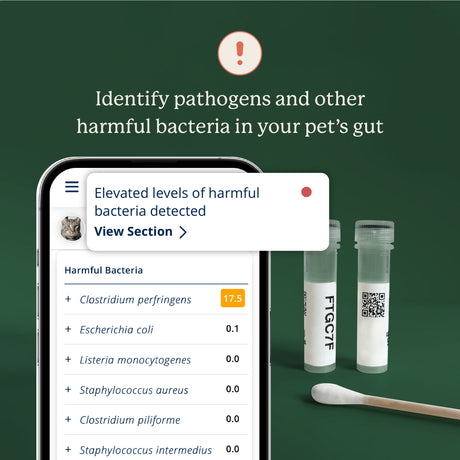
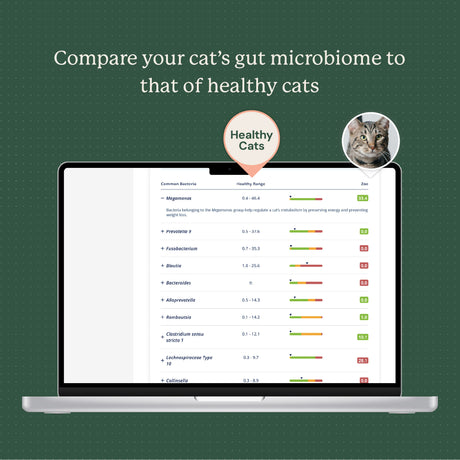
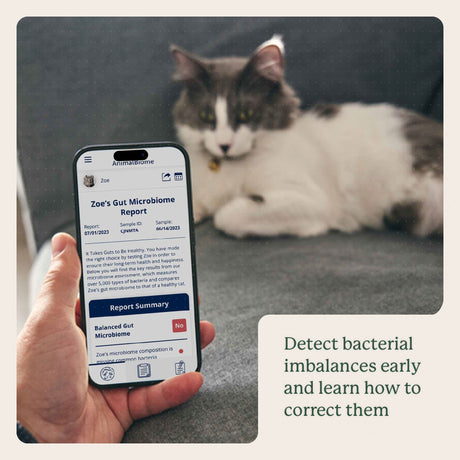
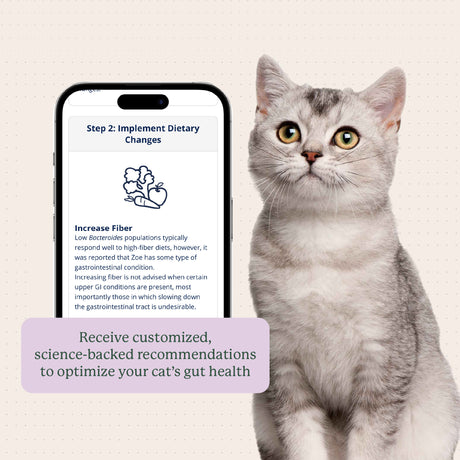
Because dysbiosis of the gut microbiome primes the immune system to generate allergic responses, your cat’s allergic symptoms may be a clue that their gut microbiome is imbalanced. A Gut Health Test is an easy, non-invasive way to find out whether that’s the case. By analyzing a small sample of your cat’s poop, this test can identify imbalances in their gut microbiome. The test report also provides personalized insights into how you can improve your cat’s gut health and strengthen their immune system.
The Skin Microbiome Is Also Involved
Your cat’s skin is their largest organ, representing up to a quarter of their total body weight. Like the gut, the skin has its own microbiome, a complex community of bacteria and other microorganisms that perform multiple important functions to support the body’s overall health.
And just as imbalances among the bacterial populations in the gut microbiome can cause some digestive or immune functions to stop working correctly, imbalances of the skin microbiome can also contribute to a number of health issues, including allergies.
Important differences have been found between the skin microbiomes of healthy cats and cats with allergies. Specifically, certain kinds of bacteria, including Staphylococcus, are more abundant on the skin of allergic cats.
Fortunately, even imbalances in the skin microbiome can be approached via the gut: thanks to the gut–skin axis, changes made to the gut microbiome—through dietary modifications or supplements—also influence the skin microbiome. So improving your cat’s gut health can have a direct, positive effect on their skin symptoms.

How Do You Find Out If Your Cat Has an Allergy?
If the various symptoms that can be caused by allergies (itching, sneezing, diarrhea, etc.) can also have other, non-allergic causes, how do you figure out whether your cat has an allergy?
Itchy skin, for example, is a classic symptom of multiple health issues, including both bacterial and fungal infections. One very common fungal infection in cats is ringworm (dermatophytosis, which is typically caused by the fungus Microsporum canis). Another fungus that commonly causes itchy infections is a species of yeast called Malassezia.
To determine what’s causing your cat’s itching, your veterinarian may use a flea comb to look for evidence of fleas, take skin scrapings for microscopic analysis, and order fungal cultures. Unfortunately, no reliable tests for specific pet allergies are currently available, but your vet may want to conduct blood tests to confirm that your cat’s symptoms are indeed caused by a hyperactive immune response. Expect that much of the diagnostic process will consist of investigating and eliminating other possible causes of your cat’s allergy symptoms.
Common Types of Allergies
Feline allergies can be categorized into several key types, each triggered by different environmental or dietary factors. The most prevalent type is flea allergies, which result from a reaction to flea saliva. Cats may also develop food allergies, which are immune responses to specific dietary proteins. Common culprits include chicken, beef, and fish. These allergies can lead to symptoms like diarrhea, skin irritation, or vomiting.
Any of these allergic responses can present with multiple clinical signs, such as itching, sneezing, or GI upset, making it important to carefully observe your cat and consult with your veterinarian for a diagnosis and next steps.
Flea Allergy
Flea allergy is the most common allergy in cats. The trigger in this case is actually an antigen in the flea’s saliva. When a flea bites an animal, a little of the flea’s saliva enters the animal’s bloodstream, where that antigen may trigger an exaggerated immune response.
It’s normal for flea bites to cause a little itching and irritation, but in a cat who is hypersensitive to flea saliva, even a single bite can cause a severe reaction—intense itching, scratching, chewing or biting of the skin, and resulting hair loss. The areas most often affected are the base of the tail, the face, and the neck. The skin condition that results from this reaction is called flea allergy dermatitis.
Flea allergy is typically managed by controlling the cat’s exposure to fleas, usually with consistent use of a safe, effective flea protection product designed for cats. (Note that flea products designed for dogs are not safe for cats!)
Contact Allergies
Contact allergies are caused by allergens that a cat comes in physical contact with. This is the least common category of allergies in cats. However, some cats do develop symptoms, such as itching or sneezing, in response to certain substances.
Here are some common contact allergens that can affect cats:
- laundry detergents
- plants
- cat litters
- shampoos
- flea collars
- fabrics
- dyes
- perfumes
Once identified, such allergens can usually be removed from the environment, and the cat’s symptoms quickly subside. For example, if your cat seems especially itchy right after you wash their bedding, try switching to a milder, unscented laundry detergent.
Atopic Dermatitis
Atopic dermatitis is not a specific allergy. It’s a chronic skin disease caused by a severe immune system reaction to one or more environmental allergens. Here are some of the most common allergens involved in atopic dermatitis in cats:
- house dust mites
- pollens (from trees, weeds, and grass)
- molds
- mildew
The clinical signs of atopic dermatitis, which may be seasonal flare-ups or year-round, include:
- severe, generalized itching
- inflamed skin
- scabs
- hair loss
- secondary infections
If your cat’s skin symptoms have continued for a long time and no specific cause has been identified, your veterinarian may diagnose the problem as atopic dermatitis. Although this condition can be difficult to treat with traditional medications, the symptoms of atopic dermatitis can be improved with microbiome support. (We’ll talk about how to reduce or eliminate symptoms a little later in this article.)
Food Allergies
Like some humans, some cats are allergic to particular foods or food ingredients. Any cat can develop a food allergy at any age, though there’s some evidence that cats with food allergies will show symptoms of the condition by the age of two years.
Food allergies usually cause itching and irritation of the skin. About 10%–15% of cats with food allergies have gastrointestinal symptoms, like vomiting and diarrhea.
Because itching is often the main sign, a food allergy may look similar to an environmental allergy (to something airborne, like pollen), but the itching caused by a food allergy isn’t seasonal. The areas most often affected are the head and neck, which may have crusts, bumps, missing hair, and/or swollen patches.
The trigger involved in a food allergy is typically a protein source. The most common food allergens in cats are fish, beef, chicken, and milk products. Allergies to other ingredients in a cat’s diet (like corn, wheat, additives, or preservatives) are possible but much less likely.If your cat has digestive symptoms that seem to be caused by a particular food, the problem may be a food allergy, but it’s more likely to be a food sensitivity.

Food Sensitivity vs. Food Allergy
Food allergies and food sensitivities (also called food intolerances) may produce similar symptoms, but these two conditions involve very different biological mechanisms.
A food sensitivity is a digestive problem—specifically, the inability to digest a particular ingredient properly. A familiar example is lactose intolerance, which is very common in cats (and in humans). A cat with lactose intolerance lacks a particular enzyme (lactase) that’s needed to break down the kind of sugar (lactose) found in dairy products. Without that enzyme, the cat’s digestive system can’t process milk correctly, so ingesting any dairy tends to result in diarrhea, vomiting, and/or flatulence.
Food sensitivities are much more common than food allergies. And cats can develop a sensitivity to pretty much any ingredient in their diet.
A food allergy is a problem with the immune system, not the digestive system. Specifically, the immune system overreacts to an ingredient in the diet by producing antibodies called immunoglobulin E (IgE). Those antibodies play an important role in protecting the body from harmful invaders (especially certain parasites), but when they’re unleashed on a harmless food molecule, the result is an exaggerated inflammatory response that leads to symptoms like itching, sneezing, vomiting, or diarrhea.
Testing and Treatment for Food Allergies
Figuring out whether your cat has a food allergy can take some time and effort, since it’s often a matter of ruling out other possible causes for your cat’s symptoms. Unfortunately, there are no tests currently available that can reliably identify food allergies in cats.
The standard and best way to diagnose a food allergy is through an elimination diet trial. This approach involves eliminating all the foods your cat has eaten before and transitioning them to a “novel protein”—that is, a protein source they have never been exposed to (e.g., rabbit, venison, kangaroo).
You will need to feed the elimination (hypoallergenic) diet exclusively for 8–12 weeks, being careful not to give your cat anything else (no treats, no flavored medicines). If your cat’s symptoms resolve, the cause is assumed to be a food allergy. After three months, you can gradually reintroduce one ingredient from the old diet. If no allergic symptoms occur within two weeks, that ingredient can be ruled out as a suspect.
Once you’ve pinned down the particular food(s) your cat is allergic to, strictly avoiding those ingredients should keep your cat symptom-free.
How to Get Rid of Cat Allergies Naturally
There is no cure for the immune system dysfunction that causes allergies, but the symptoms of an allergy can be managed. Depending on the type and severity of your cat’s allergy, managing their symptoms might not be that difficult. And in many cases, it won’t require medications.
Reduce Exposure to Allergens
The first and most important step in helping an allergic cat is to reduce or eliminate the amount of allergens in your cat’s environment. Controlling allergen levels minimizes their exposure to whatever triggers their symptoms. If possible, keeping your cat away from whatever their immune system is overreacting to will usually solve the problem.
- Reduce airborne allergens by vacuuming frequently and/or using a HEPA filter in your air purifier
- Remove any materials that trigger contact allergies.
- Avoid identified food allergens by feeding an elimination or hypoallergenic diet.
- Consider hypoallergenic cat products, like bedding and grooming supplies
Control Itching
The skin irritation and itchiness caused by many allergies can be very uncomfortable and even painful, so controlling your cat’s itching is another important step in helping them feel better.

The inflammation involved in itchy skin tends to progress in a self-perpetuating cycle: The body’s exaggerated immune reaction to an allergen (whether airborne, ingested, or touched) causes inflammation of the skin, and inflammation generates heat. Warmer skin encourages yeast to flourish, and yeast makes the skin itchier. Scratching then creates openings in the skin and also stimulates the release of more body oil, which encourages more yeast. The immune system reacts to that overgrowth of yeast by generating more inflammation, and the cycle continues.
But the involvement of the gut in this inflammatory response gives us a way to manage itchy skin without relying on problematic medications like steroids. Because that inflammation response is an immune system function, and most of the immune system resides in the gut, we can often improve or resolve a cat’s itchy skin by healing their gut microbiome.
Here are some ways you can improve or alleviate your cat’s allergy symptoms by promoting a healthy gut:
Test your cat’s gut health.
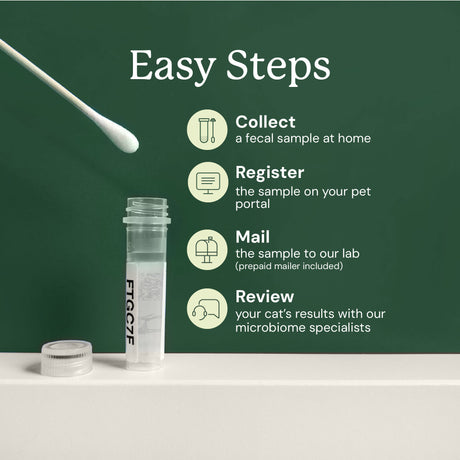
The first step is to find out what’s really going on in your cat’s gut microbiome. Our easy, at-home Gut Health Test identifies all the different kinds of bacteria present in a small sample of your cat’s poop. The personalized report tells you whether a microbiome imbalance may be involved in your cat’s symptoms.
Feed a high-protein, low-carbohydrate diet.
What you feed your cat also feeds the thousands of different kinds of bacteria that live in their gut microbiome. Since cats are obligate carnivores, they and their gut microorganisms do best on a diet that’s high in protein (containing more than 40% protein on a dry-matter basis) and very low in carbohydrates. The gut bacteria that like to eat carbs are associated with higher levels of inflammation, so it’s especially important not to promote those carb-loving bacteria.
Promote beneficial gut bacteria.
Supplementing your cat’s diet with prebiotics, like inulin, fructo-oligosaccharides (FOS), and mannan-oligosaccharides (MOS), supports good gut health by feeding the beneficial bacteria that thrive on these special dietary fibers. The probiotic yeastS. boulardii is another supplement that has been shown to promote beneficial gut bacteria. And in addition to improving stool consistency and reducing inflammation, S. boulardii also benefits the skin microbiome. Both prebiotics and probiotics can be easily added to your cat’s food with KittyBiome S. boulardii + FOS powder.
Restore gut microbiome balance with a fecal transplant.
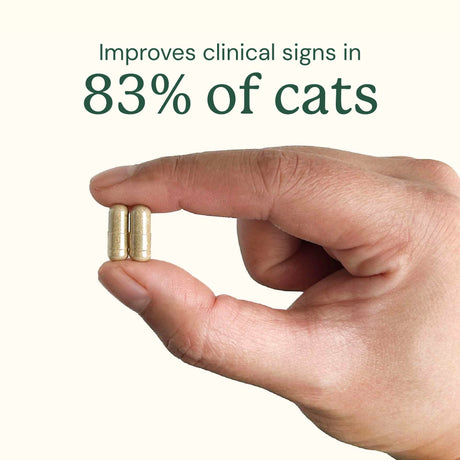
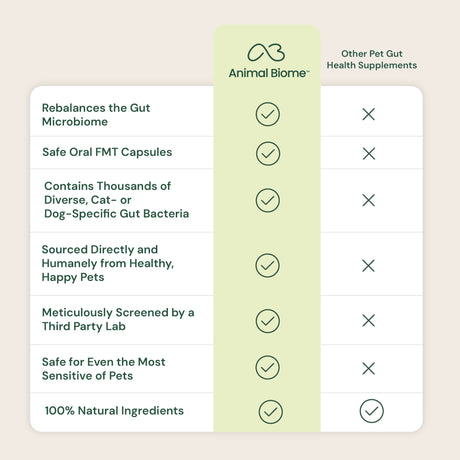
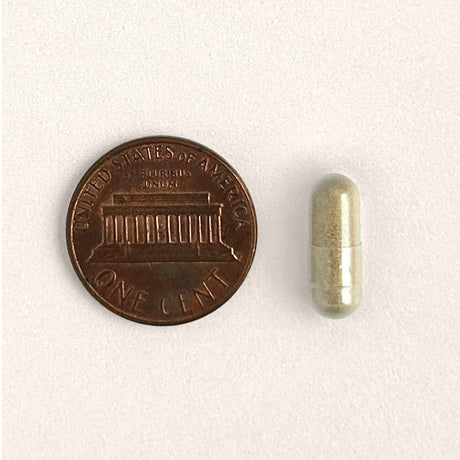
Fecal microbiota transplant (FMT) is the process of transferring a whole, balanced community of gut microorganisms from the stool of a healthy donor to the GI tract of a sick patient. And FMT via noninvasive oral capsules is just as effective as FMT via enema (which in animals requires sedation). Atopic dermatitis symptoms can be improved significantly by FMT, as demonstrated by recent studies in dogs and mice.

Manage Atopic Dermatitis
Even though there’s no cure for atopic dermatitis, the symptoms can be managed effectively. If your cat is diagnosed with atopic dermatitis, you have a variety of treatment options to consider.
Your veterinarian may prescribe one or more of these medications for allergy relief:
- Corticosteroids (oral or injected) to stop the immune reaction and relieve itching
- Certain antihistamines to counteract the allergic response
- Immunosuppressive drugs to reduce the immune system’s hypersensitivity
- Antigen injections or “allergy shots” (immunotherapy) to desensitize the immune system over time
- Antibiotics if a secondary infection develops
Depending on your cat’s individual case, such medications might be necessary—for example, to interrupt a severe immune response or to control a secondary skin infection. But dietary modifications (like increasing protein, decreasing carbohydrates, and adding prebiotics) and FMT via oral capsules (to restore balance to the gut microbiome and strengthen the immune system) may be worth trying first.
When to See a Vet
While mild allergy symptoms can be managed at home through allergen avoidance and microbiome-supportive care, there are certain situations where it is essential to consult your veterinarian. If your cat’s symptoms worsen or fail to improve, professional evaluation is critical to rule out more serious underlying health problems.
Additionally, signs such as diarrhea, vomiting, skin infections, significant hair loss, or dramatic behavioral changes warrant prompt veterinary attention, as these may require targeted medical treatment.